
Ministry of Highways
A staggering cascade of interlocking concrete platforms descending a Tbilisi hillside, simultaneously a building and infrastructure piece. Each level cantilevers from a central spine, forming a brutalist waterfall of raw concrete. Chakhava's masterpiece defies gravity at every turn.

Buzludzha Monument
An alien concrete saucer erupting from a Bulgarian mountain summit at 1,441 metres. Home to the Bulgarian Communist Party, its massive concrete ribs radiate from a central hub. Abandoned since 1989, now the most photogenic entropy in post-Soviet Europe.

Narkomfin Building
Proto-Brutalism crystallized. Ginzburg designed this as a physical incubator for the New Soviet Man, with tiny cell apartments deliberately forcing communal living. Pre-dates and directly inspired Le Corbusier's housing dogma.

Western City Gate (Genex Tower)
A twin-tower Brutalist skyscraper connected at its crown by a rotating restaurant, straddling the Belgrade motorway as a pure gate-architecture. The raw, board-marked concrete facade and motorway-spanning silhouette makes this one of the most confrontational pieces of Yugoslav-era Brutalism.

House of Soviets ('The Buried Robot')
Perhaps the most mythologized ruin of the Soviet era. Never completed, perpetually rotting for five decades as a symbol of failed Soviet ambition. Its nickname 'The Buried Robot' speaks to the involuntary menace of its hulking, semi-articulated facade.
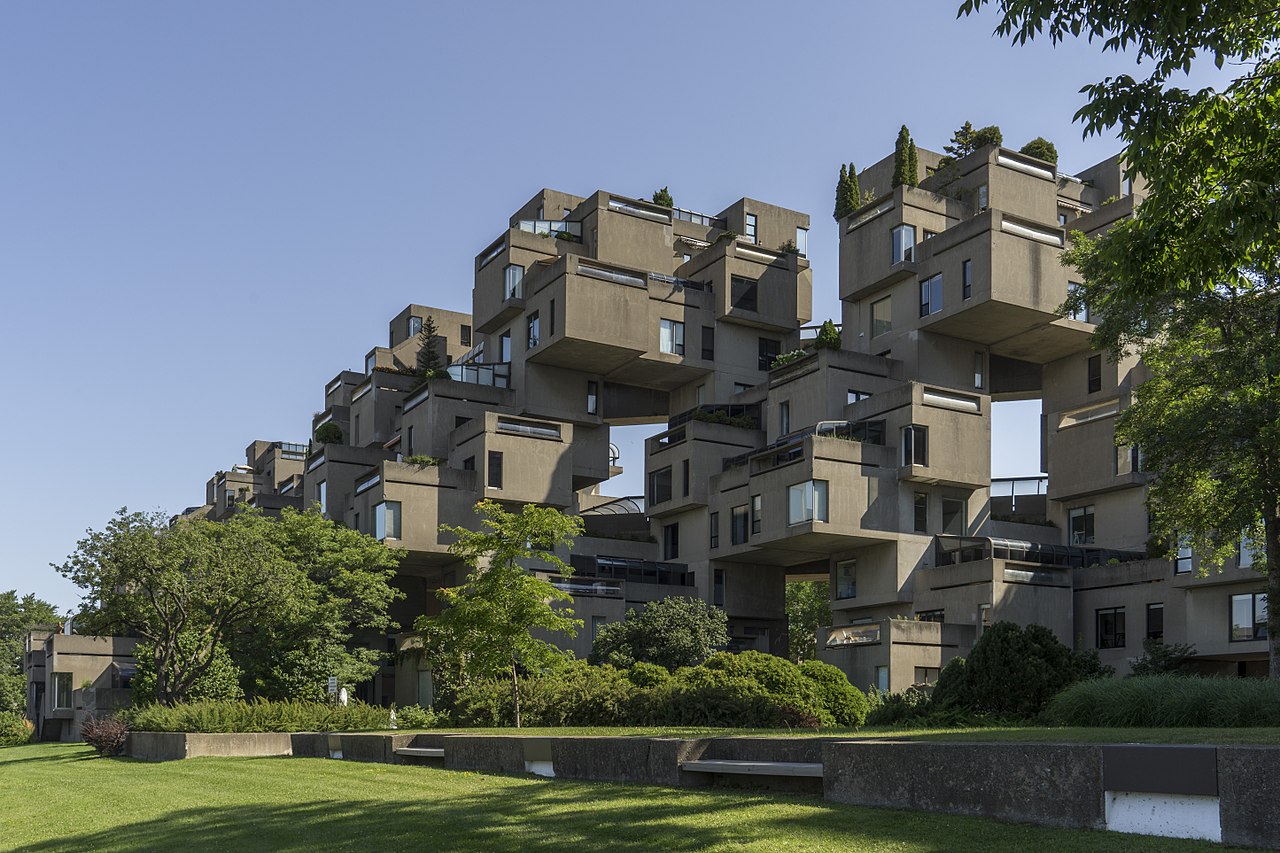
Habitat 67
354 prefabricated concrete box-modules stacked into 158 interlocking dwellings. Brutalism as systemic design — every seam, bolt, and casting mark is visible. The industrial prefabrication process is the architecture.
Robin Hood Gardens
Built by the architects who coined 'New Brutalism' — two massive curved concrete slabs with elevated 'streets in the sky'. Demolished in 2017, its passing was mourned as a catastrophic loss of social brutalism.

Boston City Hall
An inverted ziggurat that violently cantilevers outward as it rises. The building physically expresses internal function on its exterior — a defining example of programmatic Brutalism.

Trellick Tower
The terrifyingly elegant pinnacle of British high-rise social Brutalism. The detached service tower connected via sky bridges every third floor — once vilified, now an iconic London landmark.
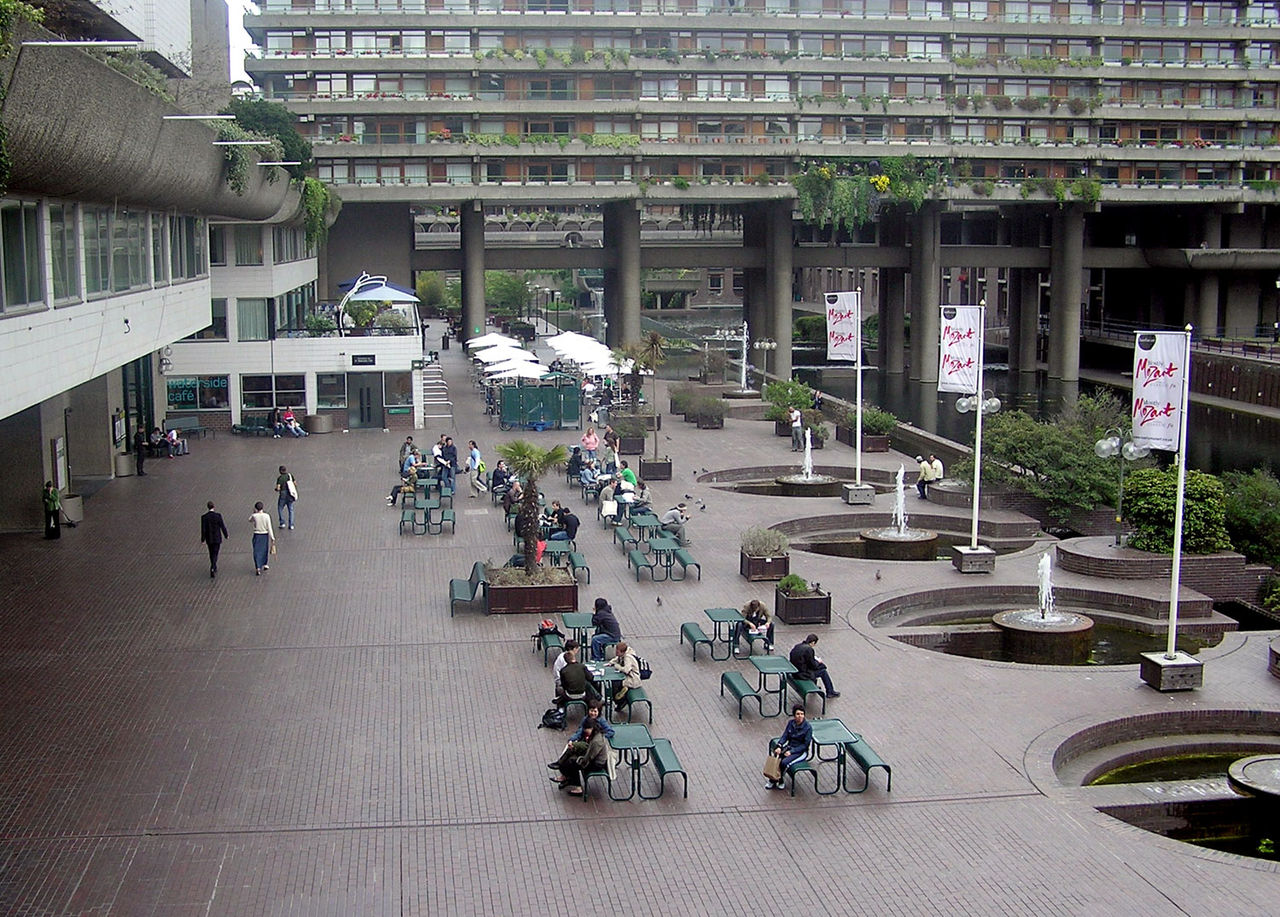
Barbican Estate
An unprecedented sprawling urban megastructure resurrecting 40 acres of Blitz-obliterated London. A multi-level utopian fortress with elevated pedestrian 'highwalks', artificial lakes and bush-hammered concrete facades.

Park Hill
A serpentine concrete slab housing 3,000 people on a Sheffield hillside. Its 'streets in the sky' were wide enough for milk floats to drive along, making it an urban village suspended in raw concrete.

Unité d'Habitation
The genesis of Brutalism. A colossal vertical garden city housing 1,600 people — the first major architectural application of béton brut. Le Corbusier left the raw wood-grain imprints of the shuttering boards deliberately visible.

Chandigarh Capitol Complex
Le Corbusier's complete urban monument to Indian independence. The Palace of Assembly's hyperbolic paraboloid concrete parasol roof is one of the most sublime structural-aesthetic forms in all of Brutalism.

National Theatre
A horizontal concrete landscape of stacked, interlocking terraces cascading to the Thames. Lasdun's 'urban theatre' concept — the building as a stage for civic life — makes it as much landscape as architecture.

Senate House
George Orwell's model for the Ministry of Truth. A towering Art Deco-Brutalist monolith that terrified Londoners with its sheer vertical concrete and stone mass. A proto-brutal civic monument.

Yale Art & Architecture Building
Paul Rudolph's masterpiece of 'corduroy concrete' — deliberately rifled ribbed surfaces creating extreme shadow patterns across every surface. The 37 interlocking floor levels create a vertiginous spatial complexity.

Geisel Library (UCSD)
An alien concrete mushroom rising from a canyon in La Jolla. Its stepped, glass-flanked concrete cantilevered platforms create the uncanny illusion of a structure hovering above ground — a futurist brutalist vision.

Sirius Building
A stacked collection of interlocking concrete apartments defying the Sydney Harbour skyline. Built as public housing, it was nearly demolished before being heritage-listed after intense public battle.
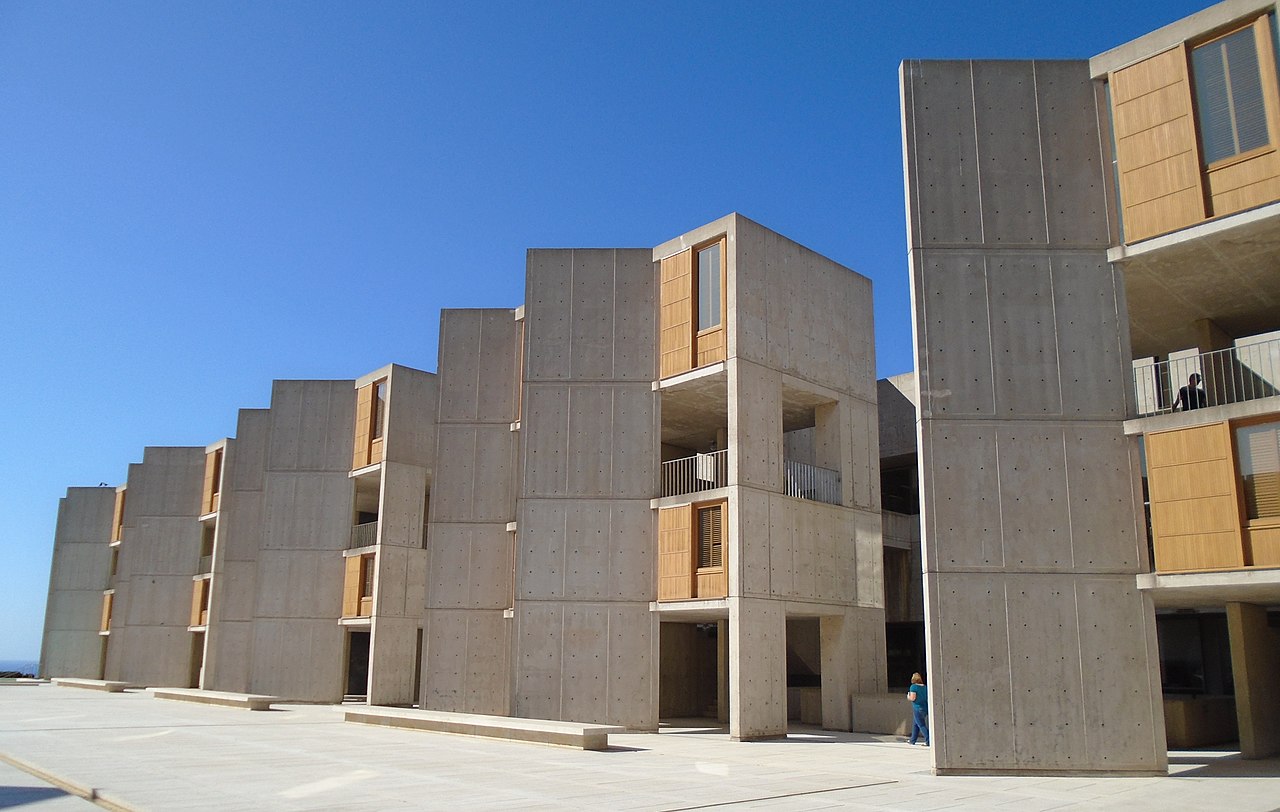
Salk Institute for Biological Studies
Louis Kahn's serene, symmetrical concrete canyon opening to the Pacific. The central travertine courtyard with its razor-thin water blade bisecting the vanishing point is one of the most profound spatial experiences in all of Brutalism.
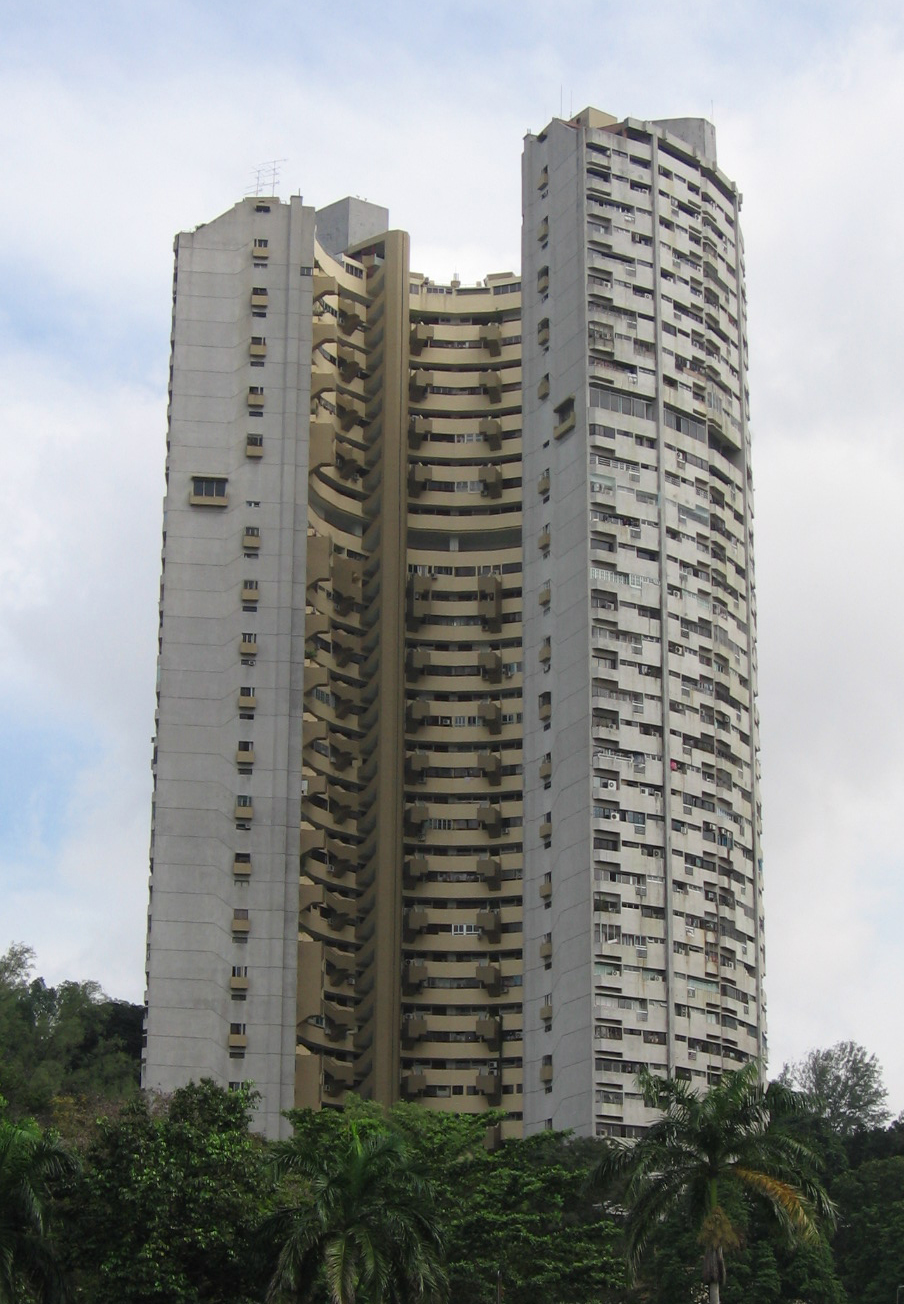
Paul Rudolph Heritage Building
A megastructural mixed-use concrete colossus integrating residential, commercial, and civic functions into a single stepped brutalist pyramid flanking People's Park in Singapore. Rudolph's tropical brutalism at its most ambitious.

National Library of Belarus
A rhombicuboctahedron of glass and steel reinterpreting Soviet Brutalist mass through a geometric crystal form. Its illuminated facade transforms the night skyline of Minsk into a science-fiction dreamscape.

Triumph Palace
A 57-story neo-Stalinist residential skyscraper referencing the Seven Sisters of Moscow. Its obsessive vertical symmetry and layered ornamentation recycles the totalitarian visual vocabulary of Stalinist architecture for the Putin era.

Gosplan Garage
Melnikov's radical constructivist garage for the USSR's state planning committee. Pure industrial architecture — the building is its function, its structure its decoration. A pioneer of the brutal-functionalist approach.

Bangladesh Parliament (Jatiya Sangsad Bhaban)
Louis Kahn's last major commission — a monumental assembly of geometric forms carved from raw concrete. The Jatiya Sangsad Bhaban floats on an artificial lake, its vast concrete circles and triangles cut into the facade creating cathedral-like interior light.

Secretariat Building, Chandigarh
A colossal horizontal slab completely armored in brise-soleils — Corbusier's deep concrete sun-grilles blocking the punishing Indian sun. The entire facade is a tectonic grid that controls climate while expressing structural forces.

Marcel Breuer Building (Cleveland)
Breuer's federal department building translated his brutal ziggurat aesthetic to Washington scale — a massive, deeply shadowed concrete slab with an elaborate exposed structural frame wrapping each floor plate.
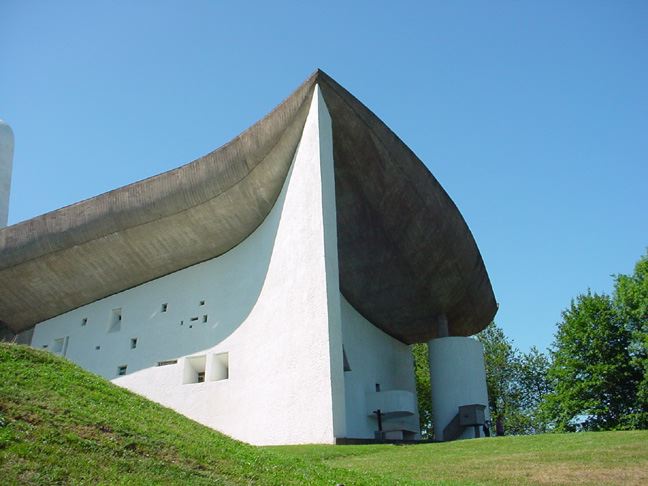
Notre Dame du Haut
Corbusier's monumental concrete prayer — a pilgrimage chapel whose swooping, shell-like concrete roof hovers over rough-cast walls pierced by irregularly placed stained-glass windows. Neither rational nor ornamental — purely expressive concrete mass.
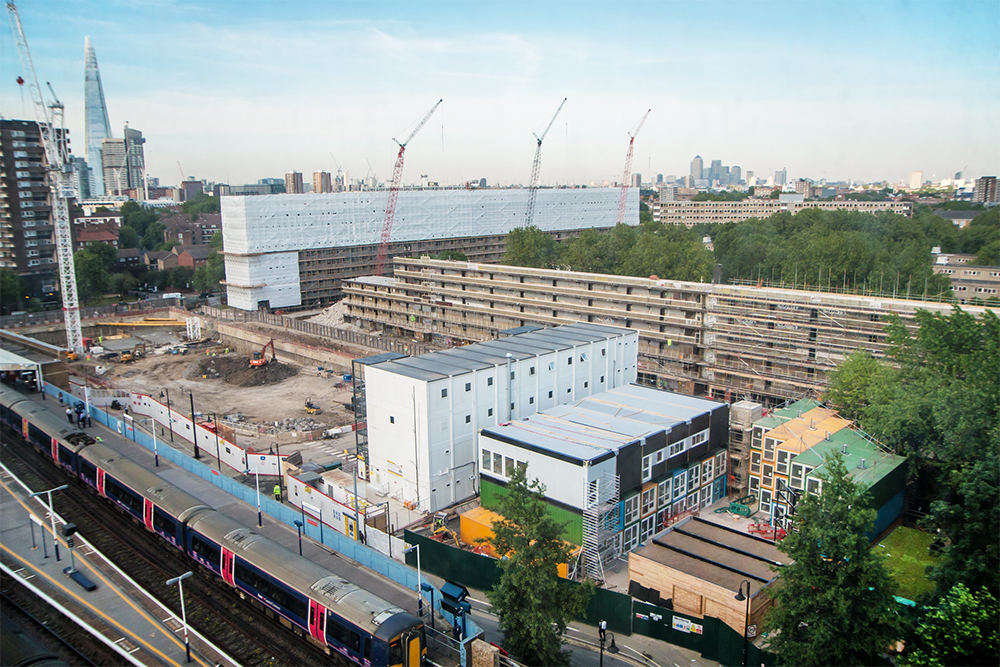
Heygate Estate
A vast interlocked concrete estate of 1,212 dwellings demolished in 2014 amid fierce controversy. Heygate's continuous elevated walkways and layered facades made it one of the most complete realizations of the 'streets in the sky' social housing principle ever built in Britain.

Prentice Women's Hospital
Goldberg's extraordinary cloverleaf hospital tower balanced four concrete petals on a rectangular base defining the absolute frontier of structural Brutalism. Its demolition in 2014 was described by architects worldwide as 'an act of vandalism against urban culture'.

Berlaymont Building
The headquarters of the European Commission — a vast X-shaped concrete and glass curtain wall structure projecting European technocratic authority. Its asterisk footprint, allowing ambulance access from all directions, became the model for postwar European civic architecture.

Torres Blancas
A raw concrete cylindrical residential tower whose plan resembles a cross section of a tree trunk — the apartment units wrapping around a structural core with curved, deeply recessed terrace balconies. One of the most dramatic brutalist residential forms in Europe.

National Congress of Brazil
Niemeyer's supreme formal statement — twin identical towers flanked by two opposed dome-bowls (Senate and Chamber), one concave facing up, the other convex. Pure sculpture in concrete at the largest possible civic scale.

French Communist Party Headquarters
Niemeyer's extraordinary domed underground assembly hall, partially buried below street level, rising only as a curving white concrete dome betraying its presence. Its futurism sits in deliberate, provocative contrast with the 19th-century Parisian streetscape.

Cibona Tower
A striking cylindrical concrete and glass skyscraper rising from Zagreb's concrete urban fabric. Its circular plan and exposed structural rings make it one of the most distinctive skyline elements of Yugoslav modernism.

New Haven Veterans Memorial Coliseum
A brutalist megastructure that integrated an arena, parking garage and offices into a single massive concrete platform. Its flat, brooding concrete slab hovering above the city streets was demolished in 2007.
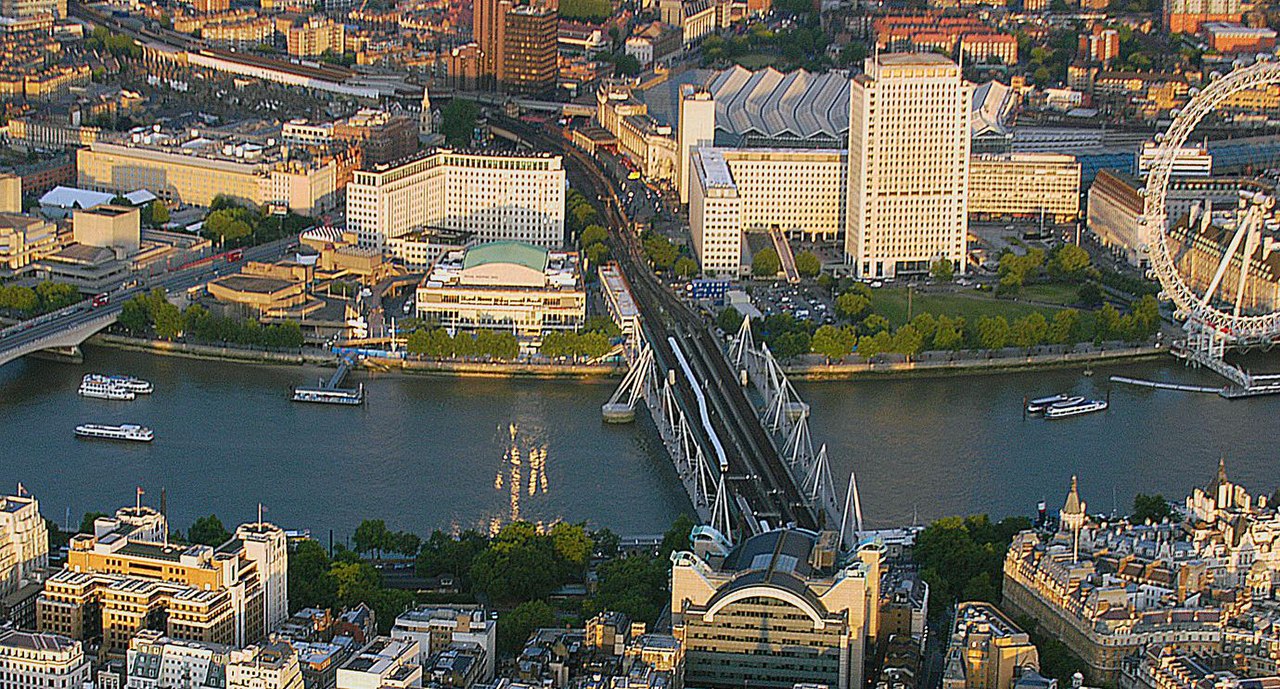
Southbank Centre
A labyrinthine concrete cultural campus on the Thames — the Royal Festival Hall, Queen Elizabeth Hall, and Hayward Gallery form a continuous landscape of elevated walkways, rough concrete terraces, and sudden drops. London's most loved brutalist landscape.

Hotel Leningrad (Corinthia Hotel)
A monolithic Intourist hotel rising above St Petersburg's Neva embankment — a vast, unbroken concrete facade confronting the baroque city across the river. The Soviet hospitality industry's brutal statement opposite the Winter Palace.

Marina City
Two concrete corncobs rising above the Chicago River — Goldberg's extraordinary spiral parking-to-residential towers where the individual apartment balconies create a precise, curved brutalist rhythm against the sky. An icon of mid-century urban optimism.
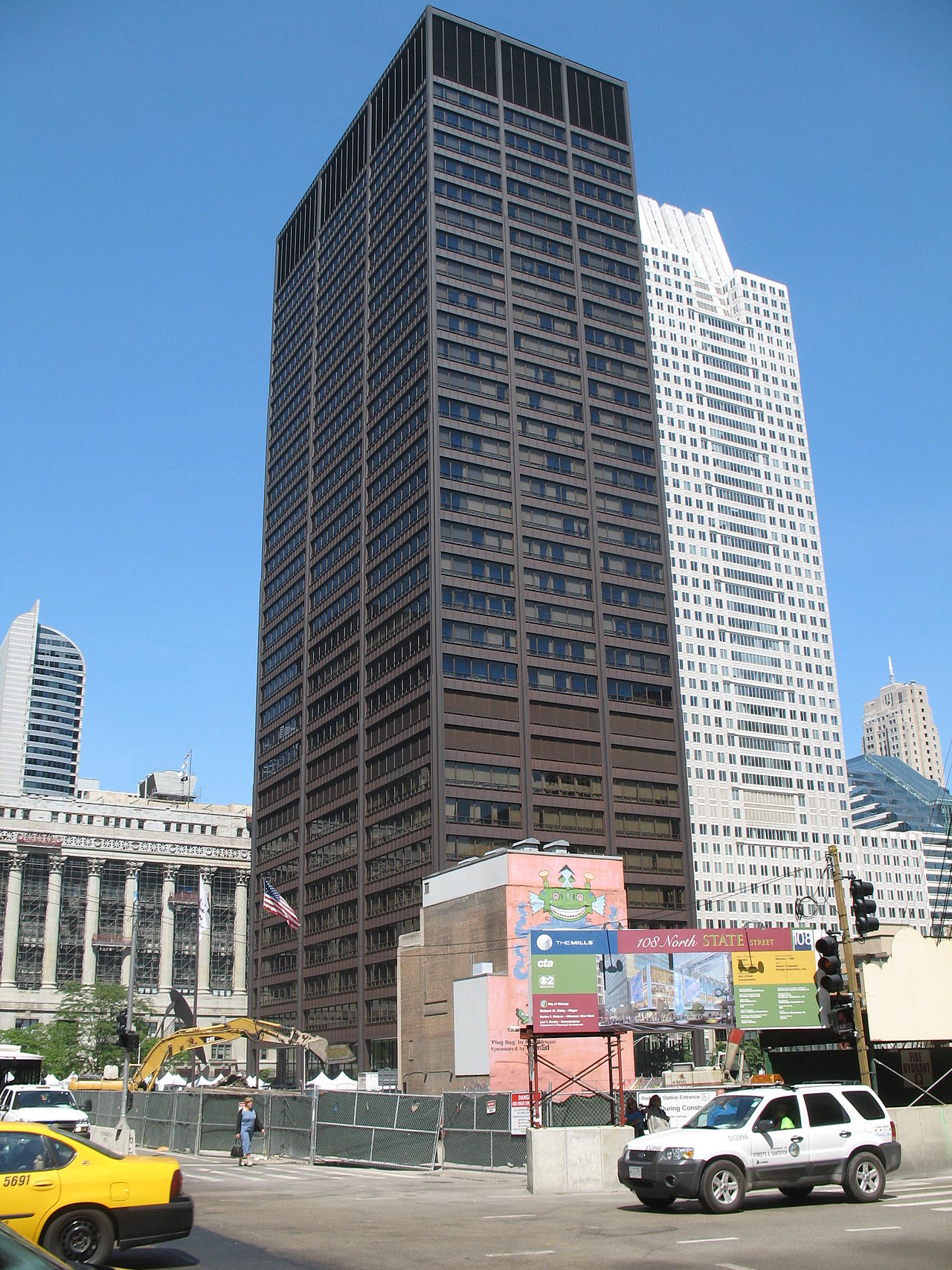
Daley Center (Chicago)
A 31-storey COR-TEN steel and concrete slab designed to weather and rust slowly to a deep mahogany-brown — the building that makes its own patina. Picasso donated the steel sculpture at its base, refusing payment, honoring the building's radical material honesty.

Centre Georges Pompidou
The inside-out building: all structure, ducts, escalators and services expressed on the exterior in a riot of colour-coded pipework over raw steel and concrete. The brutalist principle of structural honesty taken to its absolute, chaotic extreme.

Balfron Tower
Goldfinger's East London counterpart to Trellick Tower — equally dramatic in its detached service tower connected by sky bridges. Goldfinger famously lived in the building himself for two months to research the residents' experience of his own design.

Beinecke Rare Book Library (Yale)
A windowless concrete and marble lantern — translucent panels of Vermont marble replace windows, creating a golden interior glow while the exterior reads as a pure, geometric concrete frame. The books inside are visible from outside through the glowing walls.

Barbican Arts Centre
Embedded in the Barbican Estate's concrete megastructure — the Arts Centre houses three cinemas, two theatres, concert halls, galleries, and a conservatory all within a continuous labyrinthine concrete interior whose brutal aesthetic is entirely inseparable from the works it presents.

National Audit Office
A massive concrete administrative fortress rising above Warsaw's Śródmieście — its stacked, cantilevering floors form an aggressive ziggurat of raw concrete. The Polish state's raw authority expressed in béton brut.

Commonwealth Institute
A hyperbolic paraboloid copper roof sweeping dramatically over a concrete and glass pavilion — London's only example of the structural form that Corbusier used at Chandigarh. Now converted to the Design Museum, its spectacular structural shell survives.

Dundee Rep Theatre
A raw concrete cultural building whose exposed service ducts, board-marked concrete walls, and deliberately industrial aesthetic place it firmly in the late British Brutalist tradition. Its flexible performance spaces are defined by the honest expression of structure overhead.

Hayward Gallery
A deliberately uncompromising concrete labyrinth on the South Bank — its zigzagging ramps, floating concrete pyramidal skylights, and total refusal of external ornament make it the purest, most confrontational expression of New Brutalism in London.

Fondation Maeght
Sert's art museum uses raw concrete walls, terracotta tiles, and skylights to create an intimate brutalism scaled to the human body. The building dissolves into the landscape of Provence — a rare case of Brutalism that is simultaneously brutal and beautiful.

Cripps Building (St John's College)
A sophisticated concrete residential block for Cambridge's oldest colleges — demonstrating that Brutalism and academic tradition are not necessarily opposed. The board-marked concrete is meticulously crafted, its proportions calibrated against the medieval chapel next door.

Tricorn Centre
A spiraling concrete megastructure of brutalist shopping centre, car park and market that was voted 'England's ugliest building' before its demolition. As with all brutalist ruins, its absence was mourned more than its presence was celebrated.
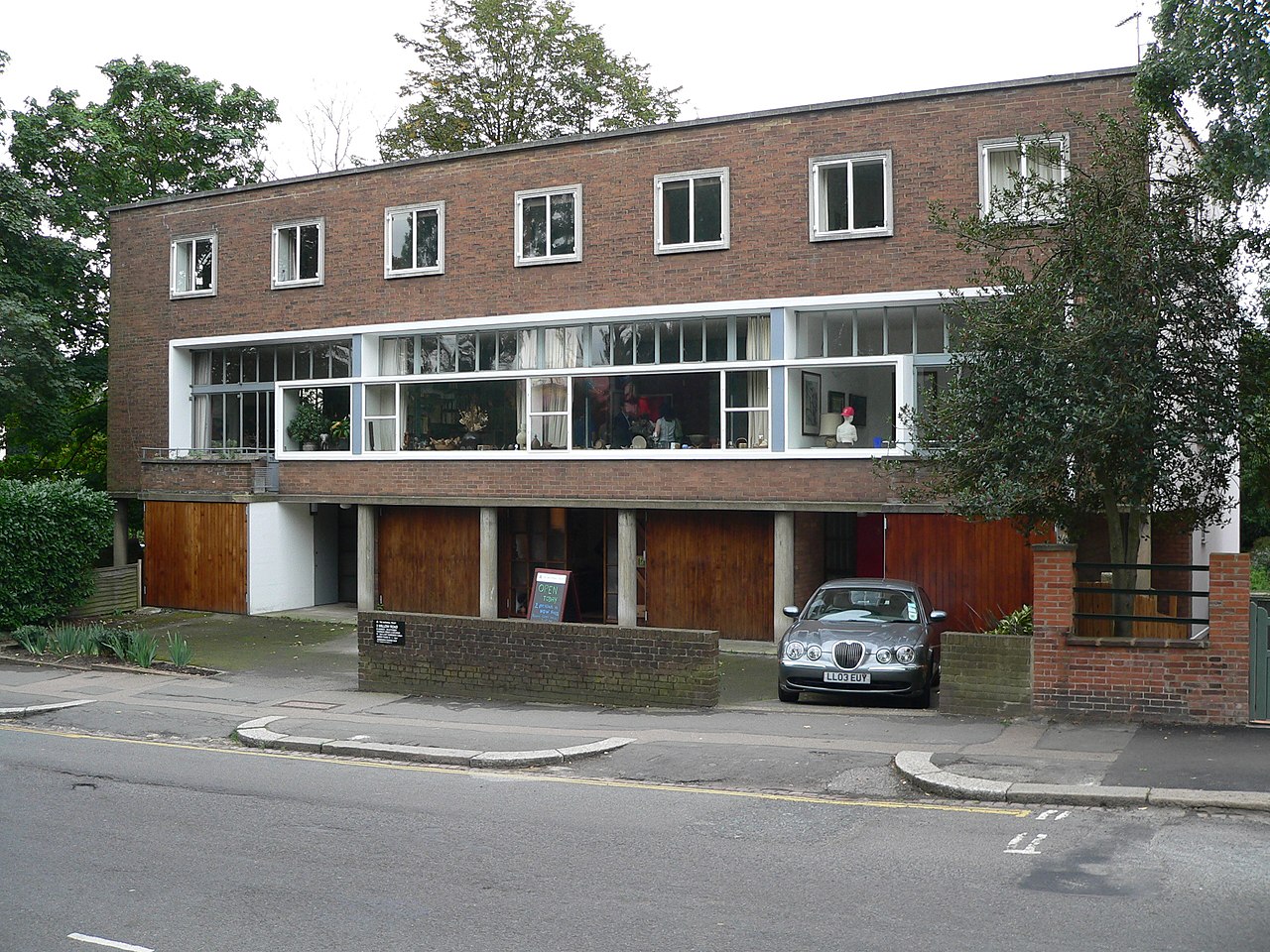
2 Willow Road
Goldfinger built this as his own home — a modest concrete and brick modernist terrace in Hampstead. Now a National Trust property, it is a museum to the architect whose residential projects for others were anything but modest.

Golden Lane Estate
The prototype for the Barbican — a smaller, equally sophisticated concrete housing estate demonstrating CPB's mastery of community-scaled Brutalism. Its slabs, towers, and rooftop sports courts became the model for the larger Barbican.

Sheffield Arts Tower
20 storeys of precise, repeated concrete and glass panels rising above Sheffield — Britain's tallest university building. Its paternoster lift (a continuously moving loop of open platforms) adds a mechanical brutalist poetry to the building's ascent.

Indian Institute of Management, Ahmedabad
Kahn's greatest Indian work — a sequence of brick and concrete forms organized around a central diagonal street axis. Its red brick and exposed concrete combination creates a uniquely Indian Brutalism that absorbs both the climate and the Mughal heritage.

Palace of Culture and Science
Stalin's 'gift' to Poland — a 237-meter Stalinist skyscraper in the heart of Warsaw imposing Soviet Gothic monumentality over the reconstructed Polish capital. Its obsessive symmetry and Soviet ornamental spire make it simultaneously absurd and viscerally powerful.

University of East Anglia (Ziggurats)
Lasdun's 'ziggurat' stepped terrace student residences descend the hillside above the Norfolk plain — each stepped level a private terrace, the whole composition forming a continuous concrete landscape integrating building and site.

International Congress Centre
A titanium and aluminium-skinned brutalist spacecraft landed on the Berliner Stadtring motorway. The ICC's futuristic metallic shell contains a vast conference complex — its aggressive, alien scale making it the most science-fiction piece of European civic Brutalism.

Hutchesontown E ('The Queen Elizabeth Flats')
Glasgow's most notorious brutalist housing towers — 21 storeys of precast concrete panels assembled with deliberately minimal finish. Their swift demolition in 1993 marked the political turning point against brutalist social housing in Scotland.

Byker Wall
A kilometre-long, eight-storey concrete-and-brick wall housing 2,000 people, designed with the existing community rather than for them. Erskine maintained his office in a converted undertakers' parlour on site — the most socially engaged process in British brutalist housing history.

Dunelm House
A cantilevered cascade of raw concrete stepping dramatically down to the River Wear directly beside Durham Cathedral — one of the most striking juxtapositions of medieval and brutalist architecture anywhere in Britain.

Narkomfin Building
The ur-text of Soviet Constructivist housing — a utopian commune-slab where collective living was encoded in concrete. Ginzburg's floating ribbon of apartments, laundry, gymnasium, and library fused into a single machine for Socialist life. A ghost ship of communal dreams now slowly restored.
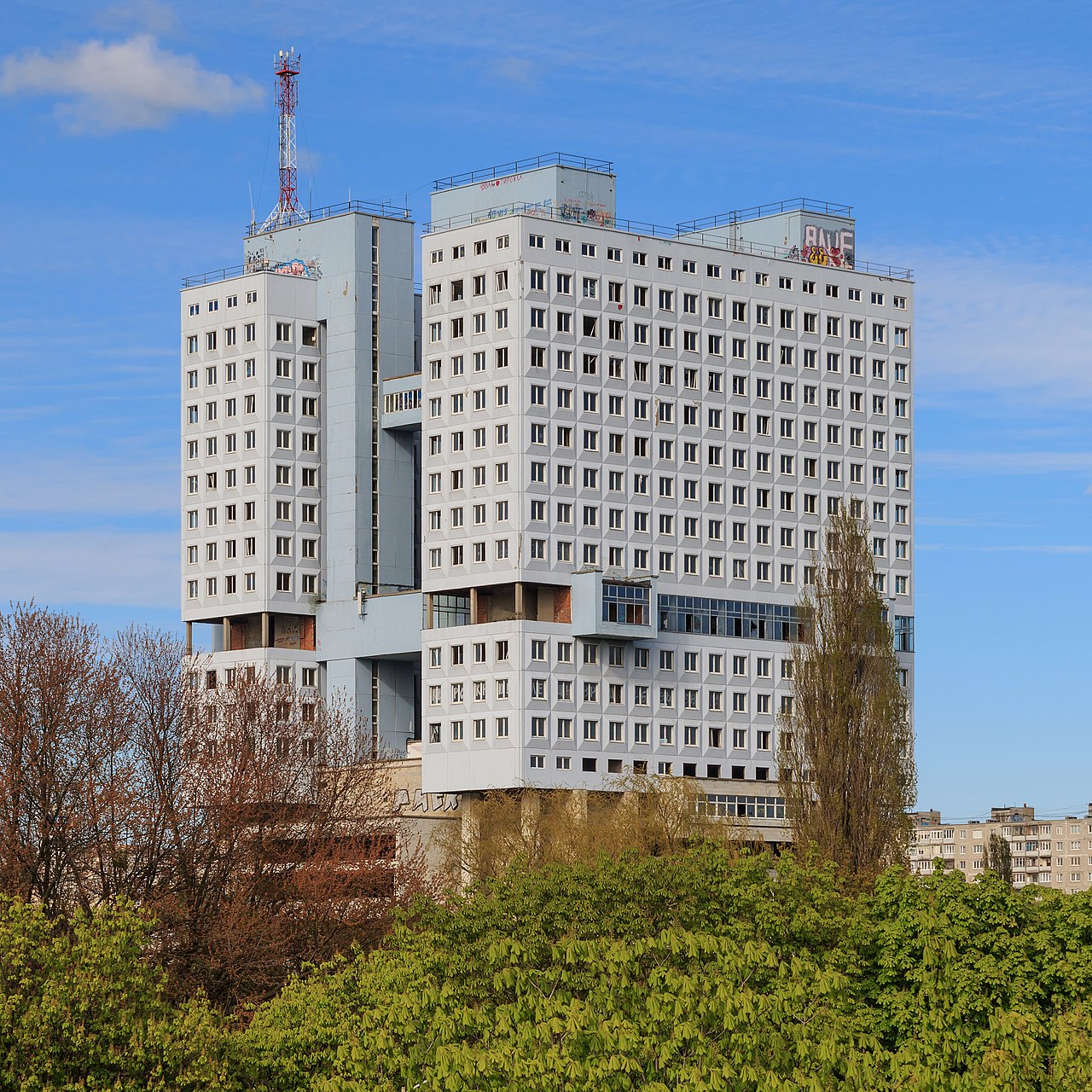
House of Soviets
Nicknamed 'The Buried Robot' and 'Monster', this immense Soviet administrative colossus rose on the ruins of Königsberg's Royal Castle. Construction halted in 1991 with the Soviet collapse, leaving a windowless concrete monolith to stare blankly over the Baltic coast for three decades. Demolished in 2024.

Russian Academy of Sciences
Moscow's golden-crowned monolith — a skyscraper of Soviet science crowned with bizarre gilded mechanical 'brains'. Rising 22 floors above Leninsky Prospekt, its massive concrete frame is topped by two enormous gilt-bronze capitals that Muscovites call 'the golden brains'. A supreme icon of late Soviet ambition.

Minsk Microrayon Housing Estates
The monolithic panel-block skylines of Minsk — immortalised as the visual identity of Molchat Doma, the post-punk band whose name means 'houses are silent'. Endless repetitive slabs of prefabricated concrete rising from the Soviet grid, creating landscapes of industrial sublime that haunt an entire generation of post-Soviet aesthetics.

New Belgrade Housing Blocks
The largest brutalist urban experiment in the Balkans — a vast planned city of concrete panel towers and slabs materialising overnight from a Danube marshland. New Belgrade's monotonous grid of identical blocks became both the symbol of Yugoslav social housing ambition and the post-punk visual landscape of an entire generation.

Habitat 67
The stacked concrete puzzle that would change housing theory forever — 354 identical prefabricated modules assembled into 146 unique apartments, each with a private garden rooftop. Built for Expo 67, Safdie's Habitat proved that density and private outdoor space could coexist in concrete, influencing generations of architects who dreamed of a new urban vernacular.

Corbusierhaus Berlin
Le Corbusier's isolated tower-city rising from West Berlin's edge — a 1,000-person vertical village of raw concrete and primary colour, built for the 1957 International Building Exhibition. The unité prototype transported to Cold War Germany, where its community living thesis met a divided city's particular longing for utopian order.

Western City Gate (Genex Tower)
Two towers linked at the 26th floor by a rotating restaurant — Belgrade's most surreal skyline signature. Built as a gateway to the city from the airport, the Genex Tower's twin columns rise from New Belgrade's concrete plain like a brutalist triumphal arch. Its cantilevered skybridge housing contains a circular restaurant that once revolved over the Yugoslav capital.
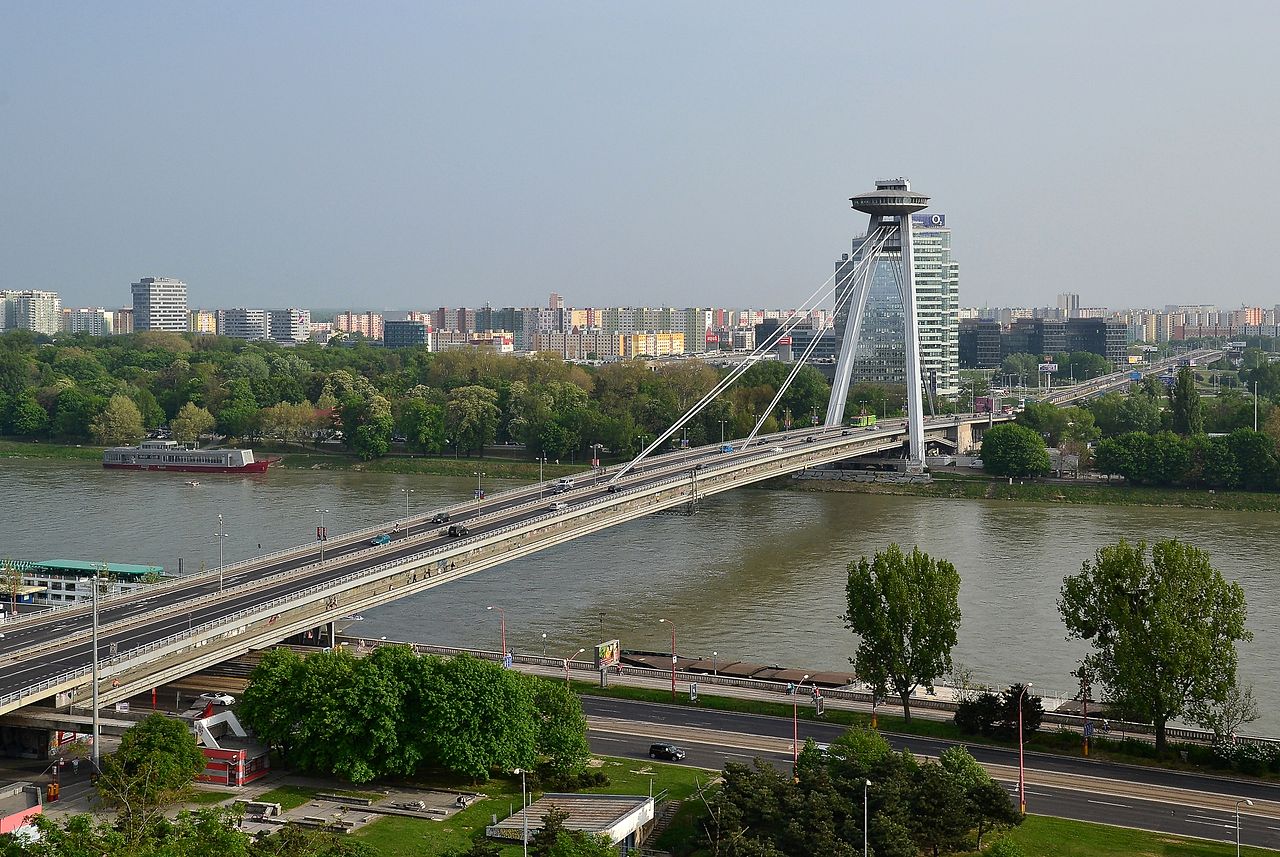
SNP Bridge (UFO Tower)
The bridge that demolished a medieval Jewish quarter to build the future — Bratislava's most controversial modernist gesture. A single stark asymmetric pylon supports the deck and, perched above it, a flying-saucer observation deck visible for kilometres. Half-brutalist engineering, half Cold War science fiction, it remains the defining image of Slovak Communist modernity.
"THE ONLY HONEST ARCHITECTURE IS ONE THAT REFUSES TO HIDE WHAT IT IS. THERE IS NO DECEPTION IN CONCRETE."